
The DIY Excavation Question
Equipment rental has become more accessible, and YouTube tutorials make excavation look straightforward. But operating heavy equipment safely and effectively requires more than watching videos. And in Pittsburgh the honest answer depends on your lot: the flat, sandy, wide-open yard those tutorials are filmed on barely exists here. Clay soil, grades, and tight hillside access define most South Hills properties, and all three change the DIY math. Here's how to decide whether to rent or hire.
When DIY Excavation Works
Small, Simple Projects
DIY excavation can work for:
- Digging a few fence post holes
- Small garden bed preparation
- Minor grading adjustments (under 50 square feet)
- Trenching for landscape lighting wire
Ideal Conditions for DIY
- Flat or gently sloped terrain
- No underground utilities
- Soil that digs easily (not rocky or clay)
- Adequate access for equipment
- No structures nearby
- No time pressure
Read that list against a typical Pittsburgh lot: clay soil, a grade somewhere on the property, and tight access between houses. Plenty of South Hills yards fail three of these conditions before the rental truck ever shows up. That doesn't make DIY impossible, but it should shape which projects you take on yourself.
DIY Equipment Options
Manual Tools:- Shovels and spades
- Post hole diggers
- Mattocks for rocky soil
- Wheelbarrows
- Walk-behind trenchers
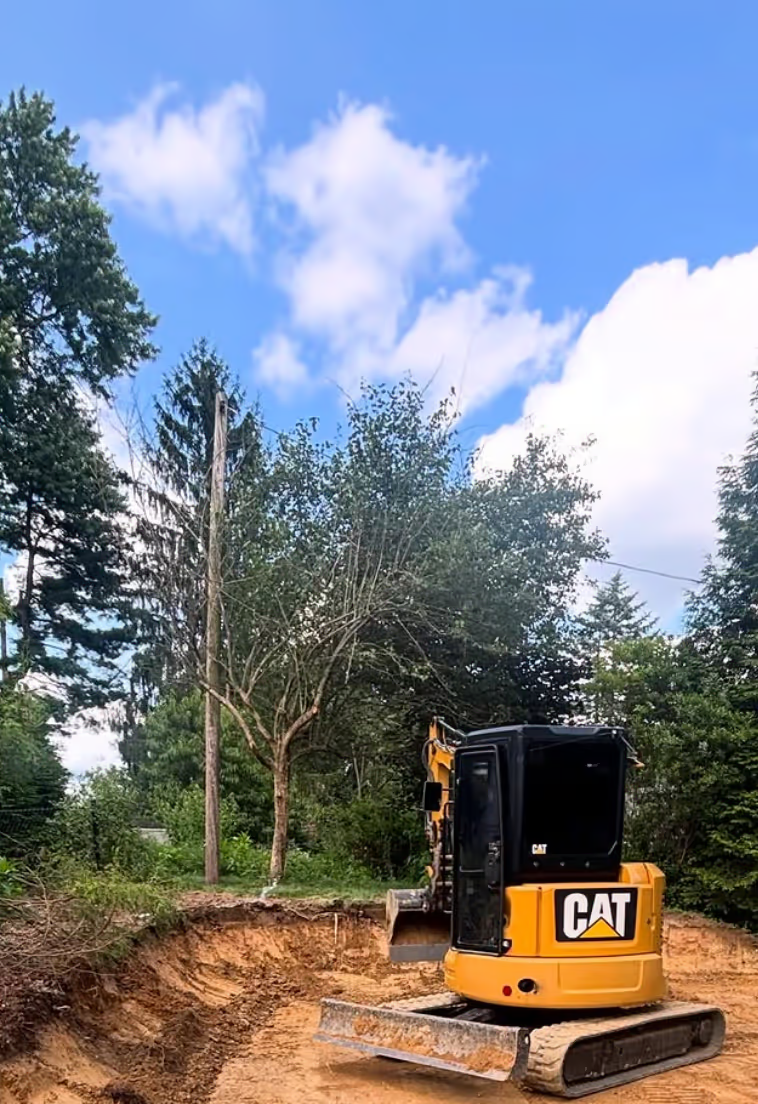
- Mini excavators (requires training)
- Skid steers (requires training)
- Auger attachments
When to Hire a Professional
Project Complexity
Hire a contractor when:
- Excavation exceeds 18 inches deep (utility risk increases)
- Working near foundations or structures
- Project involves drainage or grading to direct water
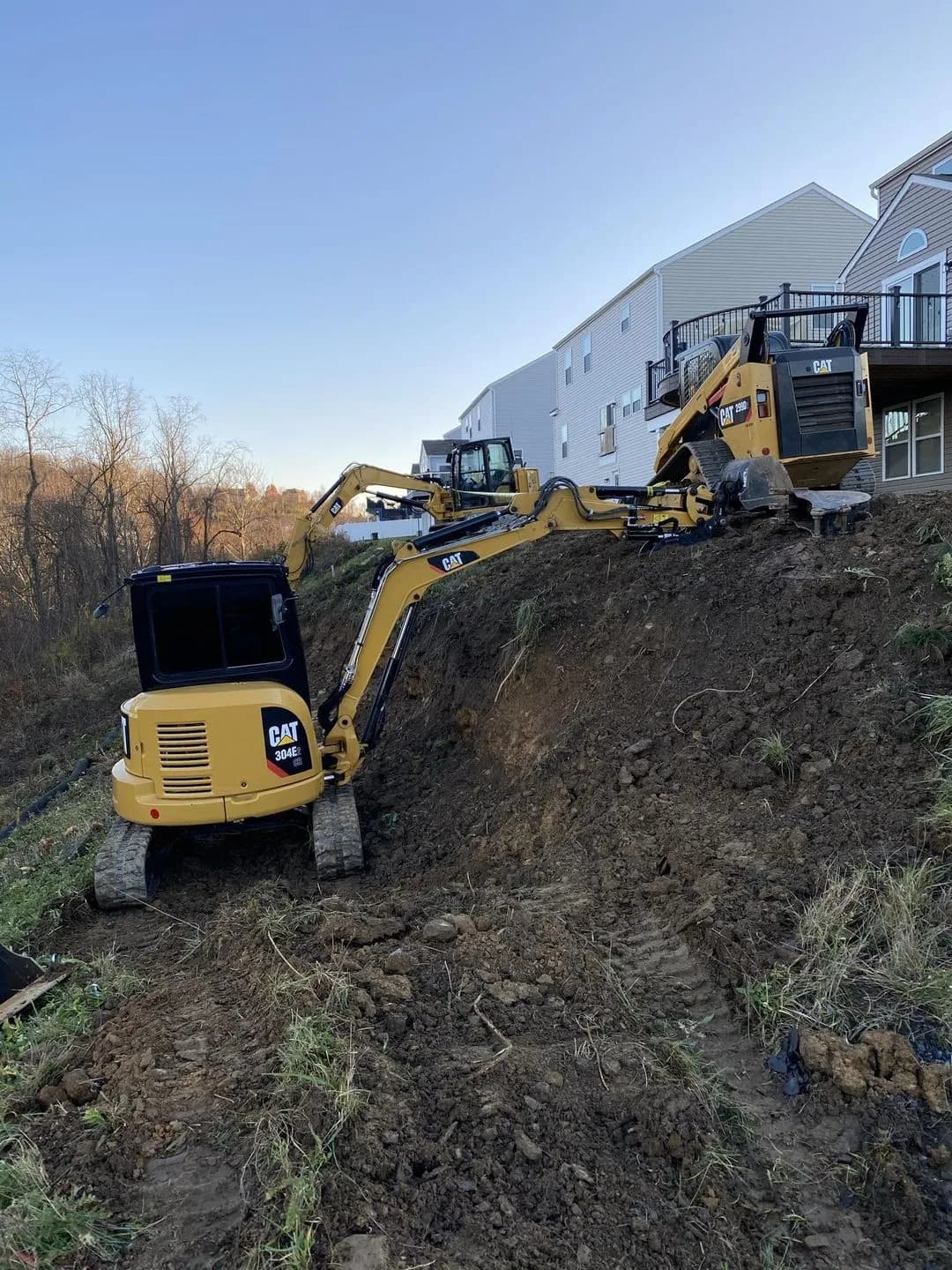
- Slopes are involved
- Large volumes of soil must be moved or removed
- Permits or inspections are required
Site Conditions
Professional expertise is needed for:
- Rocky or clay soil
- High water table
- Proximity to trees you want to preserve
- Limited access requiring specialized equipment
- Contaminated soil possibility
Risk Factors
The consequences of mistakes are severe:
- Utility strikes: Gas lines, electrical, fiber optic
- Foundation damage: Undermining structural support
- Drainage errors: Creating new water problems
- Erosion: Destabilizing slopes
- Property damage: Your own or neighbors'
The Hidden Costs of DIY
Equipment Rental
A mini excavator rental from the equipment yards around Pittsburgh seems affordable at first glance:
- Daily rate: $250-400
- Weekly rate: $800-1,200
- Delivery: $100-200 each way
- Damage waiver: $50-100/day
- Fuel: $50-100/day of use
Those delivery fees assume the truck can actually drop the machine where you need it. On hillside streets in Baldwin or Castle Shannon, getting a machine from the curb to the backyard is sometimes the hardest part of the whole project.
What Rental Doesn't Include
- Learning curve time
- Multiple trips to return for right attachments
- Disposal of excavated material
- Fill dirt or topsoil for backfilling
- Compaction equipment
- Site restoration
Time Investment
What a professional completes in a day often takes a DIYer a weekend or more. Pittsburgh clay makes this worse: it sticks to the bucket when wet and digs like soft rock when dry, so plan on slower progress than any rental-counter estimate suggests. Factor in:
- Equipment pickup/delivery
- Learning controls
- Slower operation
- Mistakes and corrections
- Cleanup and restoration
Cost Comparison Example
For a typical 50-foot French drain installation:
DIY Approach
| Item | Cost |
|---|
| Mini excavator rental (2 days) | $600 |
| Delivery and pickup | $200 |
| Damage waiver | $100 |
| Gravel (3 tons delivered) | $200 |
| Drain pipe and fabric | $150 |
| Topsoil for restoration | $100 |
| Your time (16+ hours) | ? |
| Total | $1,350+ |
Professional Installation
| Item | Cost |
|---|
| Complete installation | $2,000-3,000 |
| Includes all materials | ✓ |
| Proper grade and slope | ✓ |
| Hauling removed soil | ✓ |
| Site restoration | ✓ |
| Warranty on work | ✓ |
The price difference narrows significantly when you account for all factors.
Safety Considerations
Equipment Hazards
Mini excavators can:
- Tip over on slopes (a real hazard on South Hills grades)
- Strike underground utilities
- Swing into structures or people
- Cause serious injury from moving parts
Utility Location
Pennsylvania law requires calling 811 before digging. But:
- Marks aren't always accurate
- Private utilities (propane, electric to outbuildings) aren't marked
- Irrigation and landscape lighting aren't marked
Liability
If you damage a gas line or neighboring property:
- Homeowner's insurance may not cover equipment operation
- You're personally liable for damages
- Utility repairs can exceed $10,000
Our Recommendation
DIY When:- Project is genuinely small (under 2 hours of machine work)
- Site is simple and accessible
- No utilities or structures are nearby
- You have equipment operation experience
- Consequences of mistakes are minor
- Project involves drainage, grading, or foundations
- Site has complications (slopes, utilities, access)
- Volume of material is significant
- Quality and longevity matter
- Your time has value
Getting Professional Quotes
When evaluating contractors:
- Get multiple written quotes
- Ensure they're licensed and insured
- Ask about their process and timeline
- Confirm what's included (materials, hauling, restoration)
- Check references and reviews
If you're weighing a dig somewhere in the South Hills, Dirt Works provides residential excavation in Pittsburgh and free assessments. Sometimes we'll tell you a project is genuinely DIY-appropriate. When professional excavation makes sense, we'll explain exactly what's involved and provide transparent pricing. Contact us and we'll take a look.